
Our association gives a great and first internship opportunity to members collaboration with HISP Ethiopia.
 A criteria for an internship program designed for an active member of our association in:
Eligibility
1. Membership: Must be an active member of the professional association for a minimum of 6 months.
2. Education: Currently enrolled in or a recent graduate of a relevant field of study and have a CGPA above 3.7 point.
3. Experience: Demonstrates participation in at least one association event, project, or committee within the last year.
Application Requirements
1. Resume: Up-to-date professional resume.
2. Statement of Interest: A 300-word essay outlining career goals and how the internship aligns with them.
3. Recommendation Letter: One letter from a mentor or professional colleague within the association.
Evaluation Criteria
1. Skills Alignment: Matches the skill set required for the internship role.
2. Engagement: Proven track record of active participation and contribution to the association.
3. Leadership Potential: Demonstrates initiative and leadership skills through association involvement.
Internship Expectations
1. Commitment: Dedicate a minimum of 20 hours per week to internship responsibilities.
2. Goals: Complete a project that aligns with the association’s mission.
3. Reporting: Provide a final report or presentation summarizing contributions and learnings.
4. For future a strong commitment to work our association for ready to sign in agreement
Applicants summit thier educational documentations 25/nov-28/2024
Note
 women’s applicants encouraging
For this year only applicants only from Addia Ababa or area
Contact_ehia@ehia.et
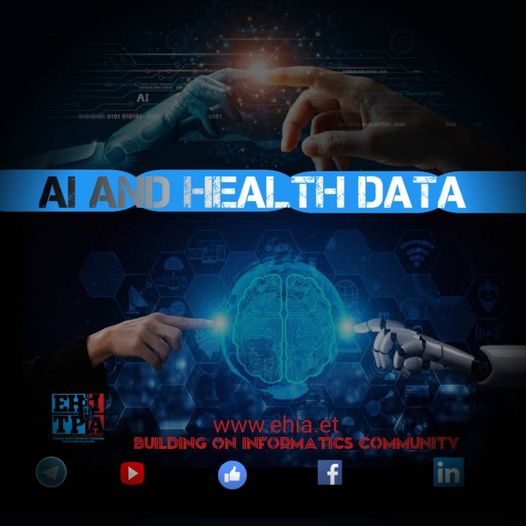
1. Artificial Intelligence in Health Informatics: Transforming Care DeliveryAI is revolutionizing health informatics by automating tasks, improving decision-making, and personalizing patient care. Tools like predictive analytics help forecast disease outbreaks, identify at-risk populations, and suggest timely interventions. Natural language processing (NLP) allows AI to extract meaningful insights from clinical notes, enhancing documentation and research. Health informatics professionals must ensure that AI systems are trained on diverse, high-quality datasets to avoid bias and deliver equitable outcomes
.2. Improving Patient Outcomes with AI-Powered Health Data AnalyticsAI enables the integration of vast health data, from electronic health records (EHRs) to wearable device outputs. These technologies help clinicians predict patient deterioration, streamline workflows, and identify gaps in care. For example, AI algorithms can detect early signs of sepsis or cardiac arrest, allowing for immediate intervention. Informatics professionals are vital in ensuring the seamless integration of AI tools within existing health IT systems.
3. The Role of AI in Enhancing Population Health ManagementAI analyzes health data at a population level to identify trends and improve public health strategies. Machine learning models can predict future healthcare needs, optimize resource allocation, and support preventive care initiatives. Informatics professionals can leverage these insights to design better health programs and tackle issues like chronic disease management and health inequities.
4. Ethics and Privacy in AI-Powered Health DataAs AI relies on vast amounts of health data, ensuring privacy and security is crucial. Informatics professionals must navigate ethical concerns around data sharing and bias in AI models. Ues properly for related to Health data management.Dr Feven B.(MD,MSC)
